Serbian President Aleksandar Vučić's stark warning that the world is now ruled by raw strength—not international law—cites America's lightning Venezuela operation as proof, but risks painting U.S. power as a destabilizing force rather than a regional stabilizer, even as Serbia quietly depends on Washington to keep the volatile Balkans from sliding back into crisis under a no-nonsense second Trump term.
By the DC Bureau | 4 January 2026
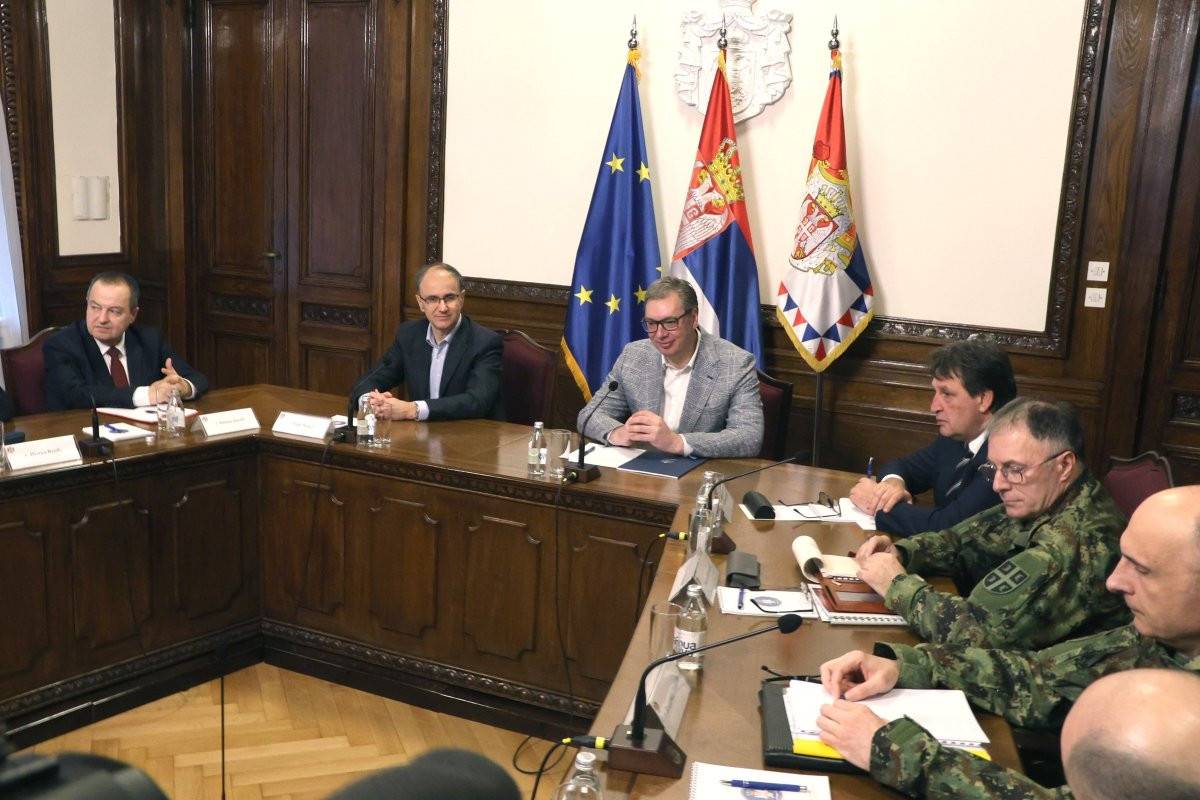
Serbian President Aleksandar Vučić came out after an emergency National Security Council meeting on January 4, 2026, and he didn't sound mad or fired up. He was calm—almost heavy, like a guy who's just accepted some ugly facts and wants his people to hear them straight.
He basically said the world has changed. The old rules are gone. International law? It's just words on paper now. The UN Charter might exist, but it doesn't actually protect anyone. What matters is raw strength—who's got more of it wins.
And he pointed right at what happened the day before: the U.S. military operation in Venezuela on January 3. In a lightning-fast strike (codenamed Operation Absolute Resolve), American forces bombed key sites, took down air defenses, sent in special ops, and captured President Nicolás Maduro and his wife right out of Caracas. They flew them straight to New York to face drug and weapons charges. Trump called it a huge success—no American losses, and now the U.S. is basically going to "run" Venezuela until things get sorted, with American oil companies moving in big time.
Vučić's take: if a country with a big army, modern defenses, and jets can collapse that quickly when a stronger power decides to act, then yeah—it can happen to anyone. Serbia's a small country in a rough neighborhood, so the message was clear: we can't wait for someone else to save us. Time to beef up the military hard—double combat capabilities, ramp up firepower, increase manpower, and rely on ourselves.
That line lands really well at home. Serbs remember what it's like to feel abandoned, to watch chaos unfold without help. "No one's coming" isn't just theory in Belgrade—it's history.
But here's where it gets tricky in Washington, especially under a second Trump term.
In the U.S., that same Venezuela operation isn't seen as proof the world is lawless—it's seen as proof that American power still delivers. When the U.S. decides to move, things happen fast and decisively. That's the whole point for a lot of people here: strength works.
So when Vučić uses that exact success to say "see, rules don't matter anymore," it doesn't get a nod of agreement. It raises eyebrows. Some quietly wonder: if U.S. power is just brute force without legitimacy, why should Washington keep throwing it around to stabilize places where partners hedge, complain, or sit on the fence?
Then there's the Kosovo angle, which is the real sensitive spot. Vučić didn't spend much time on Venezuela itself—he used it to pivot to the Balkans. He called out Kosovo's growing military, its closer ties with Albania and Croatia, and labeled them "open threats." Serbia's watching very closely.
In D.C., that's not abstract talk. Kosovo's security forces get training, oversight, and backing from the United States. When Belgrade frames their buildup as a danger, it—intentionally or not—puts American involvement in the crosshairs as part of the problem.
Trump doesn't like gray areas or arguments that turn U.S.-backed setups into sources of instability. He's all about clear lines.
Vučić kept coming back to "Serbia can only rely on itself—no one else will help." It sounds tough and real at home. But to Trump's crowd, who run foreign policy like a business deal, it hits different: Okay, fine—stand alone then. Don't expect kid gloves or special favors.
Yet Serbia still counts on exactly that: U.S. pressure to keep tensions down, U.S. restraint when things heat up, U.S. engagement when the region starts wobbling. Saying "we're on our own" while quietly expecting American crisis management? That's mixed signals—and Trump has zero patience for those.
Even the little side comments—jabs at Europe staying quiet out of fear, a joke about Greenland—might fly as dry humor in Belgrade, but in Washington they can sound like poking at U.S. leverage over allies. Not helpful.
Bottom line: Washington isn't suddenly treating Serbia like an enemy. Far from it. But Vučić's words paint a picture that's hard to ignore—a country questioning the legitimacy of American power even while depending on what that power keeps stable.
Trump doesn't need flowery loyalty oaths, but he notices who respects U.S. strength, especially when it's the thing preventing fragile spots like the Balkans from sliding back into old conflicts.
Serbia has every right to arm up and prepare for a rougher world. The danger is that the way it's explaining why risks coming across not as hard-nosed realism, but as distance.
And in Trump's Washington, distance has a cost. Not big dramatic sanctions or headlines—just a slow pullback in attention, patience, and the readiness to step in when things go sideways.
For a small country in a complicated region, that kind of quiet withdrawal might be the worst outcome of all.
