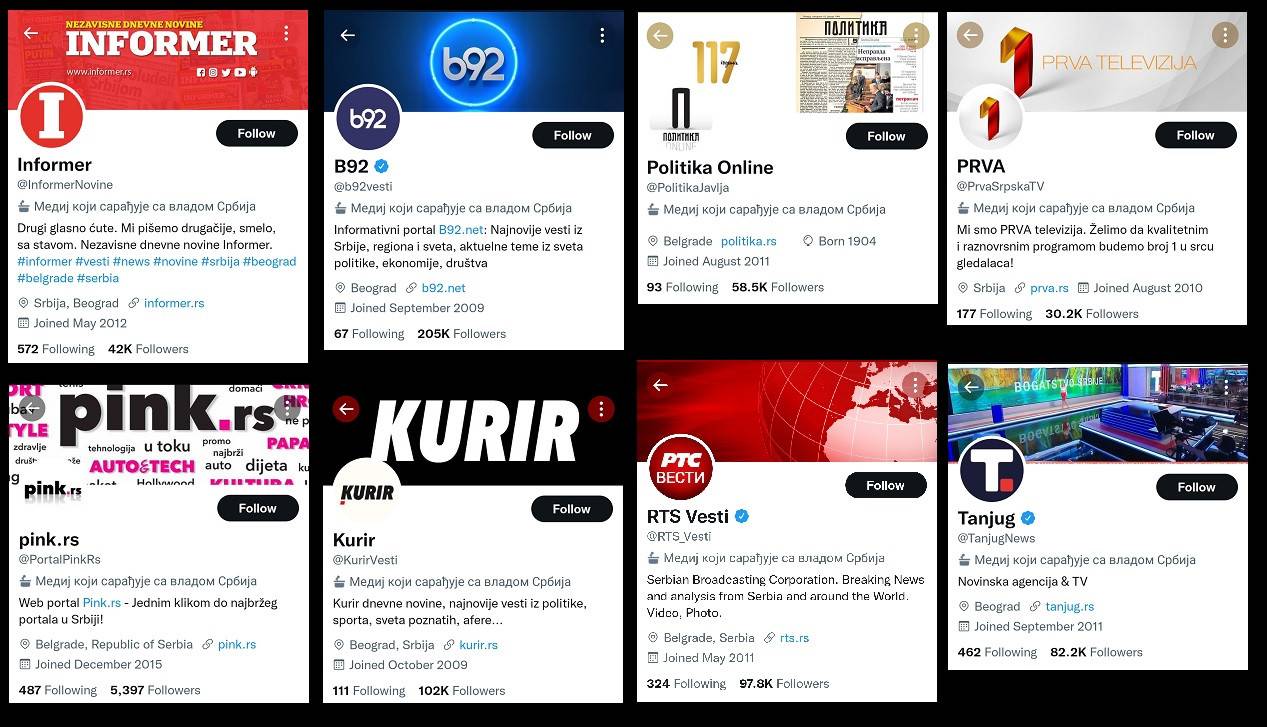
The Student List has not said what it wants in Kosovo. Srpska Lista, Aleksandar Vučić and Belgrade’s tabloids spent the week filling the gap, while the services that ran Serbia’s policy in the north came under investigation.
the Newsroom | 6 November 2026
Serbia’s electoral commission published the final result of the October 25 election on Sunday, after repeat voting at 53 polling stations: 53.01 percent for the Student List, 38.98 for the list headed by Aleksandar Vučić. By then the arguments in Serbian media had already moved to Kosovo.
Kosovo Dispatch reviewed more than 90 items published between October 30 and November 6 by Serbian state media, tabloids, independent outlets and Kosovo Serb media.
Srpska Lista and the payroll
On October 30 Srpska Lista’s extended presidency adopted six conclusions. Tanjug’s summary stressed “the survival, interests and rights of the Serb people” and “institutional ties with Belgrade”. The full text adds that jobs, salaries, new hiring and benefits financed from Serbia’s budget “must not be called into question”, and that “disinformation” in Kosovo could give Prishtina room for “new unilateral moves against the Serb people”.
The first public challenge came from Milena Petrović, a professor at the Belgrade-financed university in North Mitrovica (Mitrovica e Veriut), who said the party was “responsible for the catastrophic position of Serbs in Kosovo” and promised “no revanchism, but an end to party blackmail”. Srpska Lista’s reply cited her salary, said she had spent 32 working days in Kosovo this year and accused her of self-plagiarism. Colleagues asked how a party had come by state employment records. On Wednesday 24 professors demanded the rector’s resignation over party influence.
Emilija Marković of the Student List wrote in Kossev that the party’s claim to the trust of “more than 90 percent” of Kosovo Serbs does not hold up. Rada Trajković told Radio Kim: “The manager and de facto employer of Srpska Lista is the State of Serbia and the Office for Kosovo. A new Government of Serbia means a new Srpska Lista.”
The pro-government press took a different cue. Jugoslav Gašić of the Student List told Blic on Sunday there would be no political cooperation with Srpska Lista and “no contact with that political group from Kosovo”. Viola von Cramon posted that this was “definitely a big change... but it sounds promising”. Informer’s headline had her “overjoyed” that the Student List was “breaking relations with the Serbs” of Kosovo. Vučić had said on Saturday there was “great concern among our people in Kosovo”, adding: “I hope they will understand.”
Radoičić
Vučić’s own intervention came on TV Informer on October 30. “Handing over Radoičić, or anyone, to Prishtina in any way would mean the end of Serbia’s existence,” he said. “No, no, no, it is not capitulation. It is a formal legal recognition of Kosovo. Formal, not indirect.”
The tabloids that carried the quote did not mention that a commission at Serbia’s Supreme Public Prosecutor’s Office is examining why Radoičić was not detained after questioning, or that Radio Kim this week published calls to reopen the Banjska investigation and the 2018 murder of Oliver Ivanović. On Thursday Kossev recalled BIRN’s reporting on business links between Radoičić’s circle and Davor Macura, whose Alta banka lost its licence less than a week after the SNS lost power; Macura has since been detained.
On Wednesday Vučić widened the argument. Reacting to an interview by the EU ambassador, Andreas von Beckerath, he said the ambassador “spoke about harmonising foreign policy with the European Union, which means imposing sanctions on Russia. And one more thing: the situation around Kosovo, where certain obligations must be undertaken.” Novosti had printed that conclusion a day earlier, under a headline listing sanctions on Russia and “recognition of so-called Kosovo” as the EU’s conditions. The words it quotes from von Beckerath concern alignment with EU foreign policy and “normalisation of relations in the dialogue between Belgrade and Prishtina”. Recognition is the paper’s gloss.
The services
The week’s arrests concerned Belgrade more than Kosovo, but they reached into the institutions that ran Serbia’s policy in the north. Former BIA officers filed a criminal complaint against the agency’s director, Vladimir Orlić, on Monday; Radar published details of surveillance of prosecutors and journalists; Belgrade University said the head of the rector’s office had been under BIA surveillance for almost a year. The head of the criminal police was arrested on Sunday in a Belgrade murder case, and a warrant was issued for Igor Žmirić, commander of the Special Anti-Terrorist Unit, over the abuse of students in the government garage last August.
Aleksandar Vulin, the former intelligence chief, was on the Air Serbia flight to Moscow on Tuesday night that was turned back to Belgrade. Prosecutors said one passenger had passed the security check escorted by a BIA officer even though the alarm had sounded. Vulin, speaking from Russia on Wednesday, said: “I have not fled.” On Thursday police arrested Predrag Vuletić, a close associate of his.
Ilija Srdanović, the Student List’s lead candidate, said destroying paperwork would not hide what had been done, because “IT forensic procedures can easily find” it. Vučić’s reading, given to Novosti on Wednesday, was that “a big foreign service” plans to break the BIA “into three parts” and call it reform, and that Serbia will “slowly but surely lose its military neutrality and go toward NATO”.
Moscow, and the Student List
Politika relayed Duma deputy Konstantin Zatulin warning of lustration and questioning the new government’s independence. The Otadžbina movement said the result opened “a new phase” with Moscow after Vučić’s “duplicity”, “especially visible in the questions of Kosovo”.
The Student List’s own Kosovo line so far consists of a few sentences. Stefan Surlić, now a regular on RTS, said the new government’s priority in Kosovo would be “the protection of Serbs”. Dinko Gruhonjić, a professor whom pro-government media describe as the list’s ideologue, said Kosovo “has not been part of Serbia since 1999” and was “won with bayonets and lost with bayonets”. Novosti and Politika ran it on consecutive days; Euronews Srbija had two Belgrade professors discuss the list’s “contradictory positions on Kosovo”.
In the courts
The older story continued regardless. Politika headlined the case of nine Serbs from Zubin Potok, held on suspicion of 1999 war crimes until at least December 25, as “Kurti’s strike on the Serbs of Ibarski Kolašin”. RT Balkan wrote of “Serbs in Prishtina prisons condemned to oblivion”. A former police commander in Zveçan (Zvečan) pleaded not guilty to war crimes charges; the Ibër-Lepenc canal case got a new judge and a November 11 hearing. The European Commission’s Kosovo report supplied one more item: a passage on demolitions in Ujman (Gazivode) and North Mitrovica carried out without proper legal guarantees, which Nova led with on Thursday.
Albin Kurti has said he expects “a positive change” in Belgrade’s approach once the Student List takes office, Radio Kim noted on Wednesday. The list has not yet formed a government. Until it does, the version Serbian readers get is the one assembled from Vučić’s television appearances, Srpska Lista’s statements and the court calendar in Prishtina.