The State Department says Chinese military ties threaten interoperability. Serbia is deepening them anyway.
By Mark Gojcaj | 1 October 2026
The State Department told Congress that Serbia's military ties with China put American defense cooperation at risk. Two weeks later the Chinese army's logistics arm was inside Serbian military logistics institutions, studying how the system works.
On September 23 Secretary Rubio said Washington intends to deepen its strategic partnership with Serbia. He added that Serbia is tied up in issues that are "potentially problematic and explosive," and that the United States would manage them along the way. He did not say which issues.
His own department had named one eight days earlier.
On September 15 Deputy Assistant Secretary Daniel Lawton testified before the House Foreign Affairs Europe subcommittee. His written statement set out the policy: "In Serbia, we are advocating for the United States as the partner of choice to counter adversarial influence. Our efforts are working." Asked by the chairman about Chinese investment in Serbia, he said the Department is concerned that Serbia's Chinese arms purchases, air defense above all, "could jeopardize our ability to work closely and promote defense cooperation with Serbia." Asked later about Serbia's military alignment with Beijing, he said "it poses risks to interoperability."
Rubio did not say China was one of his explosive issues. A relationship that his own department says can jeopardize American defense cooperation belongs among them.
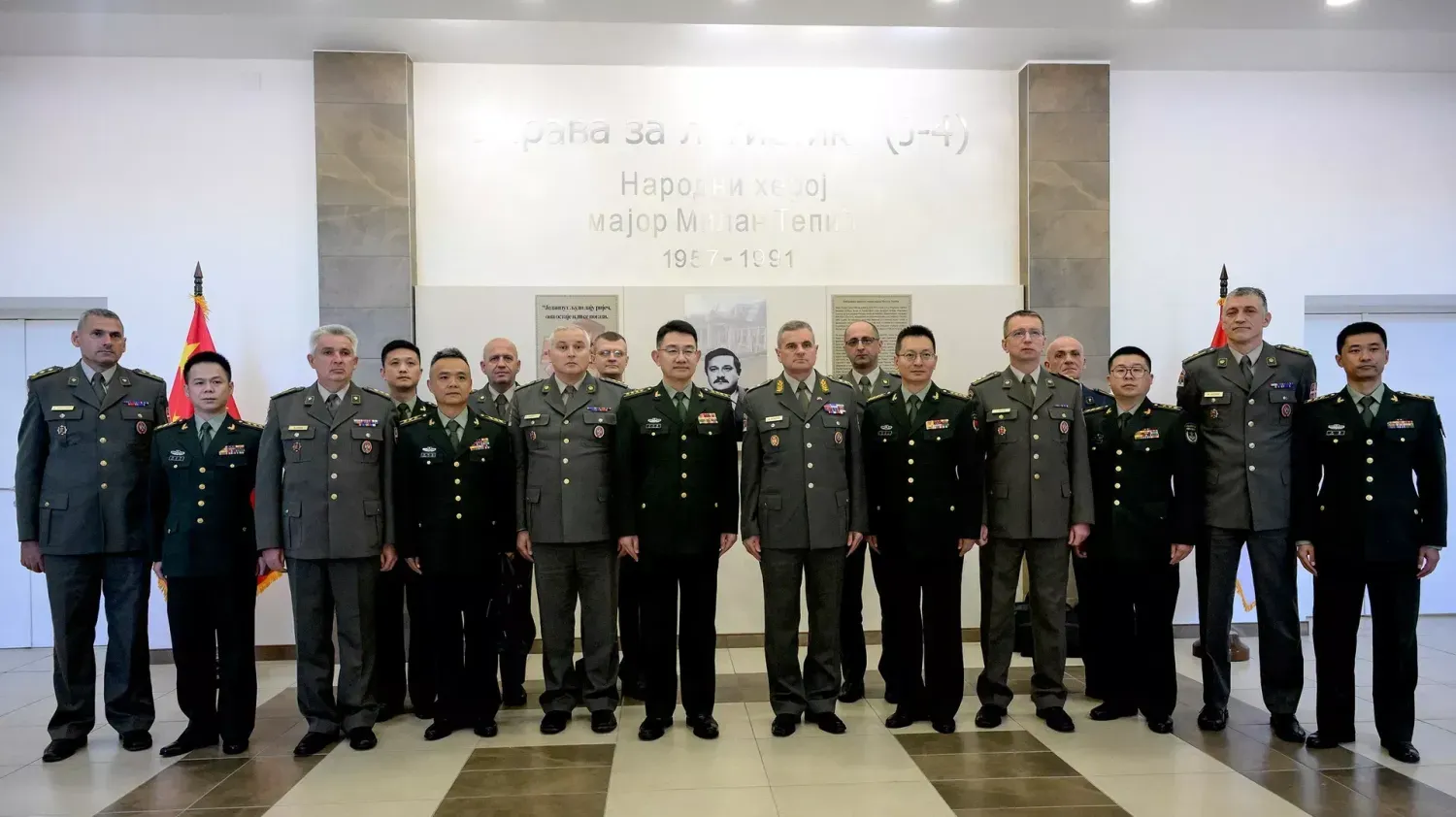
On September 29 the Serbian army announced that an expert delegation of the PLA's Joint Logistics Support Force, the arm that moves, supplies and repairs the Chinese military, was spending the week in Serbia. The delegation toured the army's logistics school and a technical overhaul plant. The release states the purpose: the Chinese came "to familiarise themselves with the organisation of logistics support."
Logistics is where interoperability becomes physical. The Ohio National Guard has spent twenty years building that with Serbia, and Mr. Lawton put it on the positive side of the ledger. The PLA delegation's program covers many of the same practical functions: transport, supply, maintenance, training, military medicine. A supplier that provides the parts, the technical knowledge and the trainers stays inside the capability long after the invoice is paid.
Serbia has said where this relationship is going. China supplied 61 percent of its major arms imports from 2021 to 2025, by SIPRI's count. On August 24 Serbia's defense minister told a visiting Chinese general that those purchases are "a strong basis for the further development of military-to-military cooperation." The logisticians came five weeks later. A joint subcommittee on military equipment and technology meets before the year is out. Buying a missile battery is a transaction. Bringing the seller's military logisticians into an exchange on maintenance, supply and training is a relationship.
Washington has priced this before. When Turkey took delivery of Russia's S-400 in 2019, the United States removed a NATO ally from the F-35 program, saying the aircraft could not coexist with a Russian system that would be used to learn its capabilities. Serbia is no ally. It is a partner surrounded by NATO members, and the Secretary has just promised it a deeper partnership.
My colleague Drizan Shala set out the industrial side in these pages on September 26. "The Same Floor" documents that the Serbian state industry which absorbed Chinese drone technology is now absorbing Israeli drone technology under a $1.6 billion Elbit framework. He found nothing in the open record showing that technology reaching China, and said so. Under a 2005 understanding, Israel consults the United States on sensitive arms transfers to third parties. Whether that mechanism applied here, and if so whether Washington was consulted, is a question with an answer.
Brussels has its own version: a membership candidate whose alignment with EU foreign policy fell to about 60 percent in the first half of 2026, the lowest of any candidate actively conducting accession negotiations, by the ISAC Fund's count.
I am for the deal. A Serbia pulled away from Beijing would be worth a Strategic Dialogue and a Secretary's visit. The test of the deal is whether the pulling works. On September 15 the Department told Congress that "our efforts are working." Fourteen days later the PLA's logistics arm was inside Serbian military logistics institutions.
If "manage" means the partnership deepens while the military relationship that Washington says threatens interoperability deepens beside it, then "manage" is a word for letting both happen. Explosive was the Secretary's word. His department supplied the example. The verb is still unexplained.
Mark Gojcaj writes from New York, where he analyzes the intersection between American conservatism and the political and security realities of Southeast Europe. He is a regular contributor to The Kosovo Dispatch on transatlantic coverage, focusing on U.S. foreign policy, NATO dynamics, and the Western Balkans.
