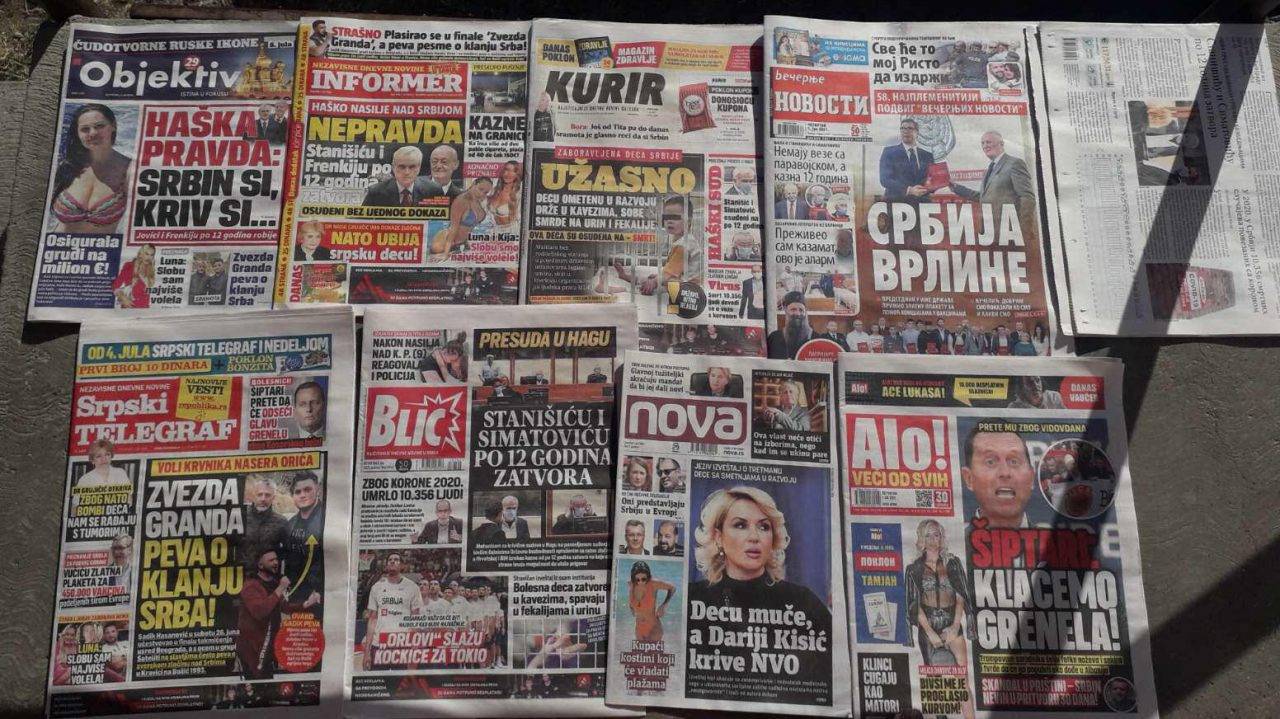
Serbia’s election winners promised this week to replace every Belgrade-appointed manager in Kosovo. They described Kosovo itself in the language of the government they beat.
KD Newsroom | 13 November 2026
On Saturday, November 7, Jugoslav Gašić, the Student List’s candidate from Kosovo, told RTS that there would be no cooperation with Srpska Lista, “the main and responsible culprit” [„glavni i odgovorni krivac“] for the position of Serbs in Kosovo, and that financial assistance from Belgrade “will certainly not be interrupted”.
The next day was Mitrovdan. Six of the list’s candidates and about twenty students crossed into Kosovo, were received by Metropolitan Teodosije at Graçanica (Gračanica) and attended the liturgy at Deçan (Dečani), where they met the abbot, Sava Janjić. The Eparchy of Raška-Prizren published the account. The students said they were determined to help “the survival of the people in its centuries-old hearths”. One of the candidates, Feđa Dimović, wrote that Kosovo is “an integral part of Serbia” and “a pillar of our spiritual and cultural identity”.
The SNS answered Gašić the same day. Ana Brnabić wrote on X that Srpska Lista has the support of 94 percent of Serbs in Kosovo and that turning away from it is “distancing from the majority of the Serb people” [„ograđivanje od većine srpskog naroda“]. The only person who shares the students’ position, she added, is Albin Kurti. Miloš Vučević put it in one line: “I fear betrayal is coming too” [„Plašim se da stiže i izdaja“].
In Prishtina the visit became a question of who had let them in. The Assembly’s security committee asked the interior and foreign ministries. The foreign ministry replied that nobody had applied to it and that the visitors had come as ordinary citizens. Daut Haradinaj called the trip “an invasion of the winners of the Serbian elections”. RT Balkan had its headline, “Prishtina on its feet”, and by Thursday Danas was using Haradinaj’s phrase in its own. Nenad Rašić, the Serb minister in Kurti’s government, said Prishtina was now more ready to form the Association of Serb-majority municipalities. Vetëvendosje said a day later that its position had not changed.
Among Kosovo Serbs the objections were different. Isak Vorgučić, the director of Radio KiM, welcomed the visit and said its messages were “too similar to everything that could be heard about Kosovo from the previous government”. The Serb National Council (SNV) said the students had broken their own rule against dealing with people who worked with Aleksandar Vučić, because the Metropolitan “was with Srpska Lista”. Emilija Marković of the Student List explained to Alternativna why they had gone at all. Rumours were going round Kosovo that the list would “betray” it and stop the funding.
Vučić returned to it on Wednesday, complaining that the list had not answered Kurti on whether it would recognise Kosovo. Gašić, on RTV’s Pravi ugao: “That will absolutely not happen” [„To se apsolutno neće dešavati“].
In the same broadcast he said: “We will change absolutely all of those managing functions in the institutions that are under the system of the Republic of Serbia” [„Mi ćemo promeniti apsolutno sve od tih upravljačkih funkcija u institucijama koje se nalaze pod sistemom Republike Srbije“]. Those are the schools, clinics, university and offices that Belgrade pays for in Kosovo, where by Gašić’s account jobs were handed out for political loyalty. The new managers, he went on, “will cooperate with representatives of Srpska Lista in institutions at the local level”. He said evidence of abuse reaches the list almost daily and that many of those involved face criminal liability. He told Kossev that the university in North Mitrovica is “the weakest link”, with March 15 and Kosovo’s Law on Foreigners approaching.
Srpska Lista replied on Thursday that for days it had heard “announcements of arrests, threats of dismissal and insults” [„najave hapšenja, pretnje smenama i uvrede“] and not one proposal, and that it would defend “every job, every social benefit”. Its leader, Zlatan Elek, went to see the US chargé d’affaires in Prishtina. The Kosovo Alliance, a Serb party founded last year that wants Srpska Lista’s officials held to account, admitted that it does not have the 600 people it reckons ten municipalities would need.
The same day a prosecutor at Serbia’s Supreme Public Prosecutor’s Office, Branko Stamenković, told Insajder that the review commission now holding 34 cases from the Belgrade higher prosecution also has Banjska in its focus. A day earlier KRIK reported that Zvonko Veselinović, the businessman from northern Kosovo tied for years to the SNS, had flown from Sarajevo to Istanbul on a Serbian passport. Radar counted the dismissals inside the BIA, the deputy director among them. The Russian ambassador and a US assistant secretary of state, Brendan Hanrahan, each met Student List representatives.
In the same week Blic, citing Croatian media, saw “a new army emerging before Serbia’s eyes”, with Americans and Turks in the key roles. RT Balkan wrote of a force that under Resolution 1244 “should not exist at all”. The Student List’s own defence programme, presented on RTS by Luka Ponorac, takes military spending to five percent of GDP. In Zubin Potok the families of three men arrested on September 27 on suspicion of war crimes began a daily protest outside the municipality, to run until the detention order expires on December 25. Dragan Dobrašinović of the Just Serbia movement filed a criminal complaint against Vučić for having accepted the February 2023 Agreement on the Path to Normalisation and its Ohrid annex.
Serbia’s new Assembly sits for the first time on Tuesday, November 17. The managers in Kosovo are to change after that. On this week’s evidence, the words are staying.
This publication’s weekly review covered 102 items published by Serbian and Kosovo Serb media between November 7 and 12.