An international mission is not a substitute address for the Kosovo government Serbia refuses to recognise.
by Ngadhnjim Brovina | 15 September 2026
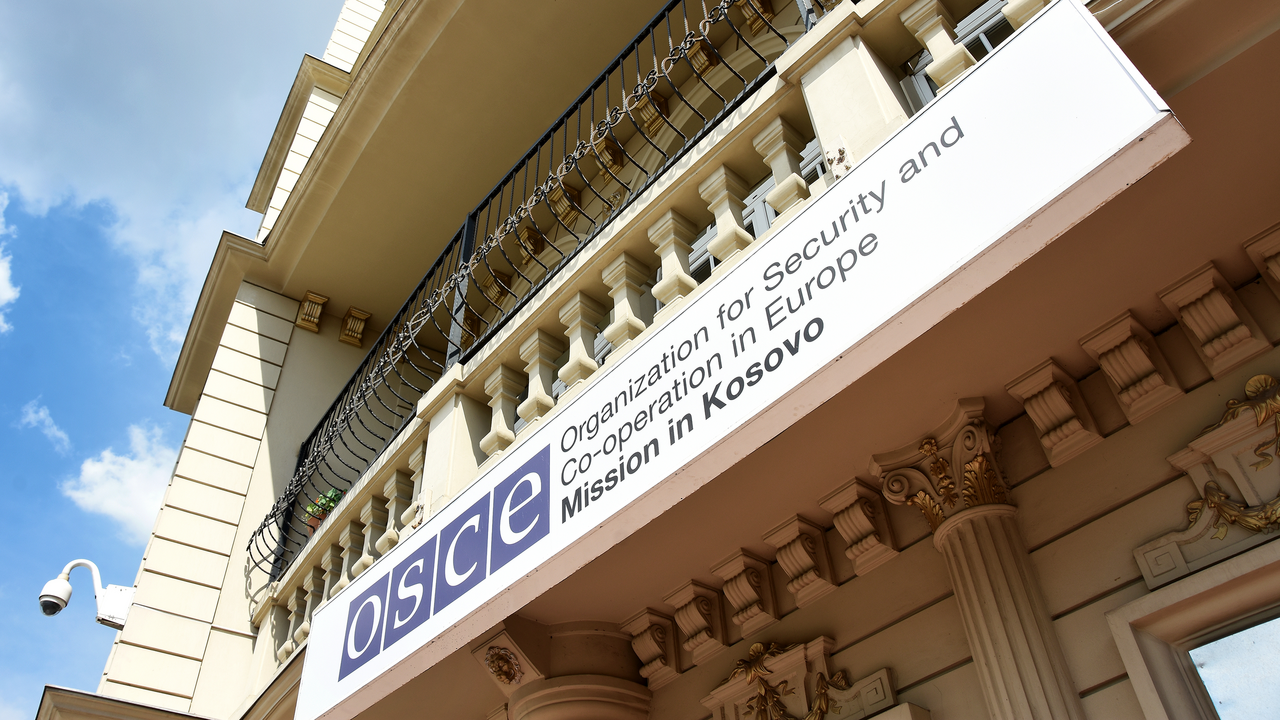
On 11 September Petar Petković wrote to Gerard McGurk, the head of the OSCE Mission in Kosovo, asking him to make possible Serbia's parliamentary election of 25 October on the territory of Kosovo. He asked him to use Resolution 1244 and, in the letter's words, his "personal authority" as head of the mission.
The important thing about the letter is not what it asks. It is whom it asks.
Serbia wants to carry out an act of Serbian state authority inside Kosovo. To do that, it needs the consent of the authorities of Kosovo. Belgrade will not seek it, because seeking it means treating Pristina as a government that can say yes or no, and that is the one relationship Belgrade spends the rest of the year denying. So Petković went looking for another address and found an ambassador.
Ambassador McGurk should understand what he is being offered. He heads a field mission. He is not Kosovo's governor or an administrator of its territory, and sovereignty is not parked at his office whenever Belgrade finds it inconvenient to talk to Kosovo. What Petković offers him is a political role that belongs to the institutions of the Republic, wrapped in a request about ballot boxes.
The wrapping is precedent. The OSCE collected Serbian ballots in Kosovo in earlier elections, therefore it can do so again. But the mission never had that power on its own. It had an arrangement, and the arrangement rested on Kosovo's consent. When the consent ended in 2022, the Quint said it was the Kosovo Government's "prerogative to decide whether or not to permit facilitation of voting in another country's elections". In 2023, when Belgrade approached the mission again, the OSCE told media that the support of Kosovo institutions was "of essential importance" and that its conditions included the consent of both sides. Those two sentences settle the question of where the request belongs. It does not belong inside the OSCE compound.
Petković knows this. That is why the letter went to McGurk. A request to the Government of Kosovo would concede that Kosovo has the authority to decide. A request to an international mission concedes nothing, and lets Belgrade go on pretending that the state's institutions can be walked around whenever Serbia declines to recognise them. The election is the occasion. Resurrecting international administration by correspondence is the purpose.
McGurk should not answer the question, because it is not his to answer. Kosovo does not need an international mission to decide whether another state may exercise its authority on our territory. We have institutions for that, and Serbia knows exactly where they are. It refuses to ask our government, then asks an international official instead, and hopes the refusal will pay. If that official engages the request on its merits, talking about Resolution 1244 or the 2020 model or what KFOR might do, Serbia has what it came for: a way to deal with Kosovo without dealing with Kosovo.
Previous facilitation was possible because Kosovo consented to it. That consent was the authority that made the arrangement possible, and no mission acquires it because Serbia prefers writing to its office.
Petković sent his letter to the wrong address. McGurk needs only to direct the sender to the institution whose answer Serbia is trying to avoid: the Government of the Republic of Kosovo. Anything more would reward Belgrade for refusing to knock on our door by having an international mission answer it from next door.