Belgrade questions a new U.S.-backed peace initiative as Washington rethinks multilateral diplomacy.
By Klea Ukaj | 22 January 2026
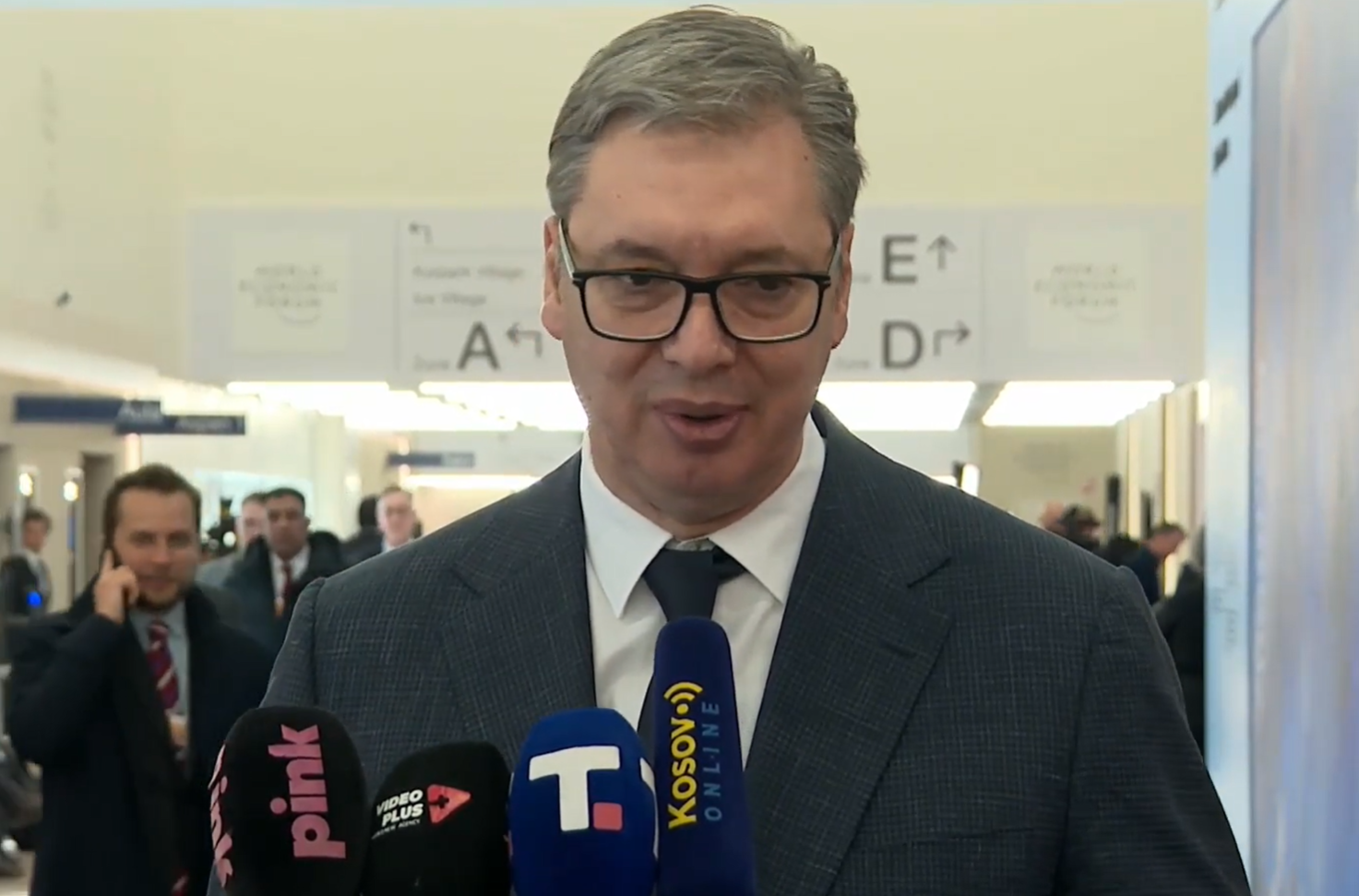
“This Peace Committee has primarily further divided Europe,” Vučić told journalists in Davos. “EU countries are either not participating or have not yet declared their position. The future will not be simple.”
The comments place Serbia among the first governments to publicly question the political direction of the Peace Council, unveiled this week as part of a Trump-backed push to reshape how peace-building and post-conflict coordination are organized. While details of the Council’s mandate remain limited, Vučić framed the initiative less as a constructive platform and more as a source of institutional tension.
Asked what the Council means for the world, Vučić said he was “not entirely sure,” adding that some have described it as a parallel structure to the United Nations. He pointed to the absence of major EU states — including France, Germany, and Italy — and noted that China has so far only confirmed receiving an invitation.
For Washington, the subtext is clear. The Peace Council reflects an approach that prioritizes politically aligned partners over universal participation. Vučić’s skepticism aligns with Serbia’s long-standing preference for established multilateral forums, particularly the United Nations Security Council, where Belgrade has relied on Russian and Chinese support to safeguard its diplomatic positions.
Vučić also repeatedly raised the issue of troop deployments, drawing a distinction between financial participation and military involvement. “It is not a problem to participate in reconstruction, to provide money for reconstruction, but sending troops is another matter,” he said. No troop commitments have been announced, but the emphasis shifts attention from diplomatic coordination to potential security costs.
Taken together, Vučić’s remarks go beyond procedural caution. They signal discomfort with a U.S.-backed initiative that operates outside familiar institutional constraints and redistributes political visibility and influence. By framing the Peace Council as divisive, Belgrade is positioning itself early as a skeptic of a Washington-driven effort to redefine how peace initiatives are organized and led.
About the author:
Klea Ukaj writes from Michigan and contributes to The Kosovo Dispatch’s trans-Atlantic coverage.
