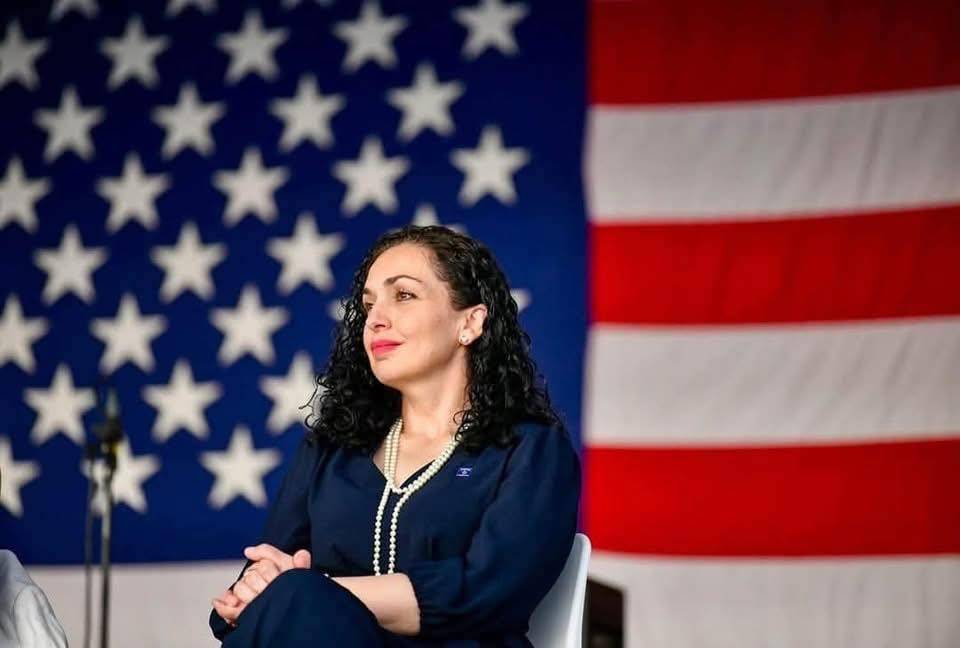
Small states are often tempted by ambiguity. They hedge, postpone choices, and mistake flexibility for strategy. In 2025, Kosovo did something different. Under the leadership of President Vjosa Osmani, it chose alignment—clearly, repeatedly, and with intent. The result was not a year of symbolic diplomacy, but a deliberate effort to convert access to Washington into lasting strategic leverage.
by the DC Bureau | 23 December 2025
Small states rarely get foreign policy right. They hedge when they should choose, moralize when they should calculate, and confuse visibility with influence. In 2025, Kosovo largely avoided those mistakes. The reason was not luck. It was presidential discipline.
President Vjosa Osmani made a clear wager: that Kosovo’s future security, economic viability, and diplomatic relevance still run through Washington—and that ambiguity, fashionable in some European circles, is a liability rather than an asset. The year that followed was less a diplomatic tour than a strategic campaign.
Six visits to the United States in twelve months is not normal diplomacy. It is persistence with intent. Two formal engagements at the U.S. State Department, direct access to the White House, and sustained interaction with Congress and the defense establishment suggest something more important than proximity: trust. In foreign policy, trust is currency. Kosovo spent years earning it. In 2025, it began to cash it in.
The most consequential development was structural. The launch of the Kosovo–U.S. Strategic Dialogue moved the relationship from episodic coordination to institutional permanence. For a small state in a contested region, this distinction matters. Strategic dialogues survive elections. They bind bureaucracies. They turn alliances into habits.
Energy policy provided a second test. The approval of a roughly $240 million Millennium Challenge Corporation project—the first anywhere after the program’s suspension—was not a technocratic footnote. It was a vote of confidence. Energy security is economic security. In the Balkans, it is also geopolitical insulation. Washington does not approve such projects lightly, particularly in regions where leverage is contested.
Security policy followed the same logic. President Osmani used sustained access to push three points with unusual consistency: Kosovo’s NATO trajectory, the normalization of defense cooperation with the United States, and a reframing of the Kosovo–Serbia dialogue away from process toward outcome—mutual recognition. These priorities were not confined to talking points. They surfaced where it counts: in law.
The FY2026 U.S. National Defense Authorization Act reflected Kosovo’s core positions on sovereignty, territorial integrity, and alignment with U.S. regional security objectives. Legislation is where diplomacy either succeeds or disappears. In this case, it succeeded.
Then came a decision that surprised even friendly observers. Kosovo abolished its 10 percent tariff on American goods, becoming the first country to do so. Economically, the impact is modest. Strategically, the message is unmistakable. Allies open markets. Clients ask for exemptions. Kosovo chose the former.
Technology and digital policy rounded out the picture. Engagements with firms such as SpaceX, Meta, Google, and OpenAI were not photo opportunities. They resulted in Kosovo’s integration into platforms like Apple Pay and Starlink—small steps that signal a larger ambition: to be part of the West’s technological ecosystem rather than a consumer at its margins.
Soft power played its role, but not gratuitously. Speaking at the National Prayer Breakfast, addressing senior officers at the U.S. Army War College, and engaging elite military-academic institutions are not symbolic gestures. They are investments in perception—where future policymakers and commanders decide which allies matter.
Perhaps the clearest signal of the year was also the least theatrical: Kosovo’s declaration of full alignment with U.S. foreign policy. In an era of fashionable hedging, clarity is underrated. For countries like Kosovo, it is indispensable.
None of this guarantees success in 2026 or beyond. Alliances must be maintained, not celebrated. Institutions must now convert access into implementation. But the record of 2025 establishes something rare in Balkan diplomacy: a presidency that treated foreign policy as strategy, not performance.
In a region accustomed to improvisation, President Osmani chose alignment. In geopolitics, that choice still counts.
