Serbia has elected another leadership that claims Kosovo. Pristina has heard the declarations, read the programme and looked at the military file. Nobody here should mistake a change of government for a change of intentions.
By Drizan Shala | 28 October 2026
Kosovo’s answer to Serbia’s new majority can be short. We believe you.
We believe Radomir Saičić, founder of the Student List and the man who announced its victory, when he tells RTS three days before the vote that Kosovo is “temporarily occupied territory”. We believe the programme on the movement’s website when it calls Kosovo a “so-called republic”, its government “provisional institutions of self-government”, and promises to bar it from international organisations. We believe the five Belgrade faculties that posted on 15 October that “the students will not sell Kosovo” and that everything the Vučić government signed was “handed over by this treasonous regime”. We believe the promise to “criminally prosecute all responsible representatives of the regime” for “unconstitutional agreements to the detriment of Serbia”. We believe Ilija Srdanović when he says every one of those agreements “can be re-examined”. Belgrade has a habit of saying what it intends, and Pristina has a habit of being told afterwards that it should not have listened.
We have heard this before, from every leadership Serbia has produced. Milošević said Kosovo was Serbia and sent the army. The democrats who replaced him said Kosovo was Serbia and sent lawyers to The Hague and lobbyists to every capital that might recognise it. Vučić said Kosovo was Serbia, financed Srpska Lista, and presided over the state in which Milan Radoičić, its vice-president, organised Banjska and returned to Serbia untouched. Now a movement that defeated Vučić on corruption and the rule of law says Kosovo is Serbia and accuses him of having been too weak to hold it. The grievance of the incoming majority is not that the old regime was too nationalist. It is that it was insufficiently successful. That is the continuity Pristina has to plan against: not Serbian citizens, who voted on canopies and courts, but the political class, which on this one question has never produced a successor who disagreed with his predecessor.
The programme tells us how the new leadership proposes to do better. Health care in Serb municipalities “as independent of Pristina as possible”. Municipalities “with the greatest possible autonomy”, which in Belgrade’s usage has meant one thing since 2013. Russia named as the “traditional partner” for “open questions”, Kosovo among them, and no sanctions on Moscow, which Saičić confirmed in his first post-election interview, given to RIA Novosti. A “comprehensive strategic partnership” with China to be expanded “particularly in high-technology investment”. And on the Drina, Saičić’s own words: “Some border divides us that is fictitious. We are a guarantor of Dayton.” Russia for the diplomacy, China for the technology, Republika Srpska for the second front. The political partnerships that framed the Vučić arsenal are all retained.
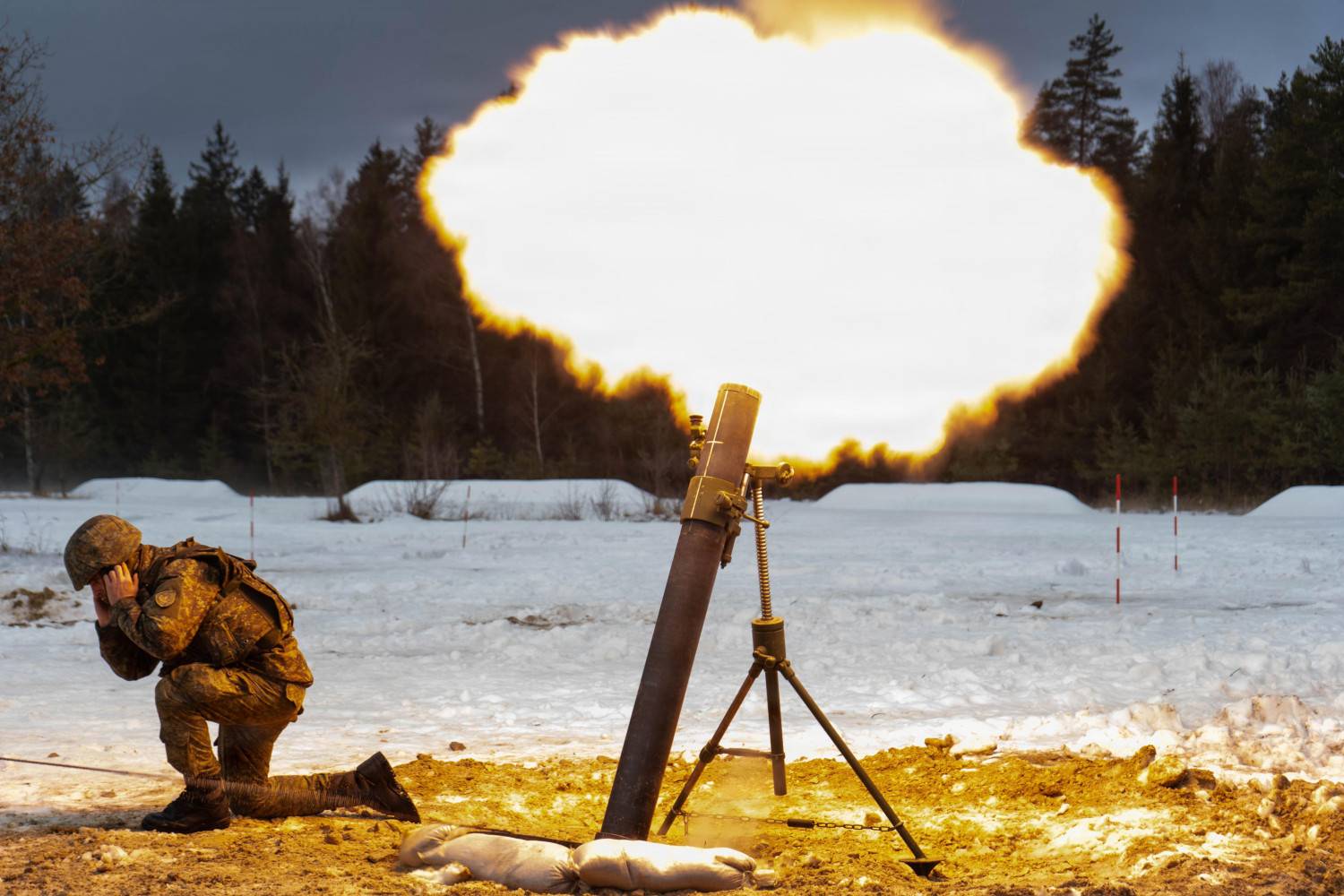
The arsenal itself is not mentioned. Not one candidate has said whether the procurement cycle continues: the Chinese air defence and drones, the Russian and Israeli systems, the domestic lines Vučić opened for export. Retaining the partners does not show that every contract runs on. It shows that nobody in Belgrade thought the question needed asking, which for a planner comes to the same thing. A government that promises to re-examine every agreement with Pristina and has nothing to say about the weapons has given Kosovo no grounds to revise a single assumption.
Saičić did add, on RTS, that this “does not mean we will now rush into war”, and that the list is not proposing to fight stronger powers. We take that at face value too. It is the honest description of the problem. No Serbian government since 1999 has planned a conventional war for Kosovo, because none has needed one. The claim has been pursued by other means, and those means are what the programme describes.
Nor has anyone in the new majority found words for what Serbia did the last time it held the “decision-making power” over Kosovo that the programme claims. Ratko Mladić was buried in Belgrade in September with soldiers in uniform and state officials present, and the movement said nothing. It rallied on Vidovdan and was silent on Srebrenica. On 1998 and 1999, more than thirteen thousand dead and some eight hundred and fifty thousand driven across the borders in one spring, the Student List’s position is the word “occupied”. A leadership that cannot name the crime is not a leadership that has ruled it out.
So we are preparing. Not for a column on the Ibër next week, but for the four things the record says Belgrade reaches for when it has a claim, a partner and no accounting: pressure on the north through revived parallel structures and the “autonomy” the programme promises; another Banjska, organised from Serbian territory by men the new government has not said it will extradite, Srdanović having deferred that question to “after the government is formed”; a test of KFOR’s contingents, whose reliability turns on national caveats and the governments behind them, and whose Slovak troops answer to a prime minister who told Vučić’s Novi Sad rally on 16 October that on Kosovo Slovakia would “never let you down”, a month after saying in Prešov that it would not be drawn into a conflict “because of some Article 5”; and a regional balance that keeps tilting as long as the procurement line stays open. Preparing means the Kosovo Security Force keeps growing on its 2028 schedule, the coordination with Tirana that this publication has argued for becomes a standing arrangement rather than a photograph, and every statement from Belgrade is logged as intent.
Preparedness has a cost, and Kosovo knows it. What it cannot afford is to build its security on the assumption that Serbia’s new leaders do not mean what they have written, repeated and promised their voters. We have heard them. We believe them. And we are preparing accordingly.