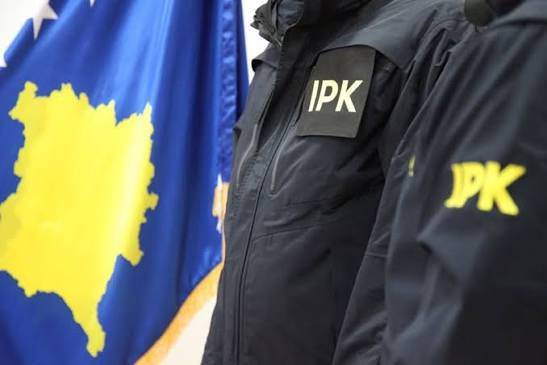
Kosovo does not tolerate unlawful police force. It also does not accept that a case its own institutions are investigating be spent as proof of the persecution of Serbs.
By Albatros Rexhaj | 18 August 2026
The Kosovo Police Inspectorate has recommended the suspension of two officers of the Regional Directorate in Mitrovica North. They are suspects in the criminal offense of mistreatment during the exercise of official duty, in the case of Nenad Rašković of Dren, and the investigation continues with the Basic Prosecution in Mitrovica.
I read that statement with pride. Not pride that two officers of my country stand suspected of mistreating a villager. Pride in what happened next, and how fast, and who did it. No one filed a complaint. The Inspectorate opened the case on its own initiative, on the strength of media reports about a Serb farmer from Zubin Potok, and six days later it named suspects from inside the state's own police and asked for their removal from duty. It wrote "without prejudging the outcome" and then followed the evidence where it pointed, which happened to be at our own men. That is what a democracy does. Kosovo is a democratic country where the rule of law prevails and checks and balances function, where abuse is not covered up for political convenience, and where the truth is paramount whatever the price of establishing it. This case is what that looks like in practice. The price was the comfort of our own police force, and the institutions paid it without being asked twice.
I was unwilling to convict these two officers when all anyone had was an accusation. I am equally unwilling to protect them now that Kosovo's own investigation has produced grounds for suspicion. It is the same standard applied twice, and it is the only standard I recognize. If they used unlawful force against Nenad Rašković, they will answer for it. Criminally, individually, by name, before a court, and if the evidence climbs the chain of command, the accountability will climb with it. Rašković's ethnicity subtracts nothing from that obligation and adds nothing to it. The account he gave from his hospital bed remains an allegation the investigation must test; that is what investigations are for, and ours is running. A country confident in its institutions does not need the file closed before it speaks. It needs the file open, moving, and pointed wherever the facts lead. Ours is all three.
Serbia's officials produced their verdicts before any file existed. Serbia's president, at the hospital bedside, told his Instagram following that Kosovo's police had beaten a man "almost to death" and "without any reason." Belgrade's defense minister attributed the injuries to "Albanian thugs." The director of the Office for Kosovo captioned the case as Kurti's "democracy." A state secretary called it systematic repression. Srpska Lista had announced weeks earlier that an entire municipality lived in terror. And after the Inspectorate acted, a member of the Lista presidency declared the party vindicated in full: "Govorili smo istinu." We spoke the truth.
Set the two columns side by side. The case accuses two men. Every sentence from Belgrade accuses a police force, a government, a people. Between two suspects and two million culprits lies the entire distance between an investigation and a campaign, and I decline to walk it. Kosovo will not shield two officers to spare itself embarrassment, and it will not surrender its police force, its government, or its people to stand trial in Belgrade's press for a persecution the case does not contain.
There is a reason Belgrade cannot say what I just said. If abuse of Serbs were state policy in Kosovo, there would be no Inspectorate opening this case unasked, no suspects named from the state's own ranks, no suspension recommended within a week. The claim sold from Belgrade is not that two officers may have committed a crime. It is that Kosovo's institutions exist to protect such crimes. The institutions have just done the opposite, in public, on the record, and the loudest people selling the claim cannot credit that fact without dismantling their story. So the suspension becomes "prvi korak," a first step owed to no institution in particular, and the demand rolls on before anyone asks which country's system delivered the step. I will answer the question they are avoiding. Kosovo's did. And the state now demanding justice for one villager's injuries has its own ledger in that same valley. For the twenty-three the record places at Kaludra and the twenty-seven years their graves were concealed, Serbia has opened no proceedings on any public record. Its one arrest touching the case came this summer, in Kraljevo, under the espionage article, against a man suspected of telling Kosovo where to dig. Zero for the killing. Zero for the burying. One for the telling. Set that ledger next to six days and two suspects, and the word difference writes itself.
The men have names. The offense has an article. The file has a prosecutor. My country put all three in place before Belgrade finished shouting, and that, not the shouting, is what the region will remember this case for.
Read also: One Outcome
